




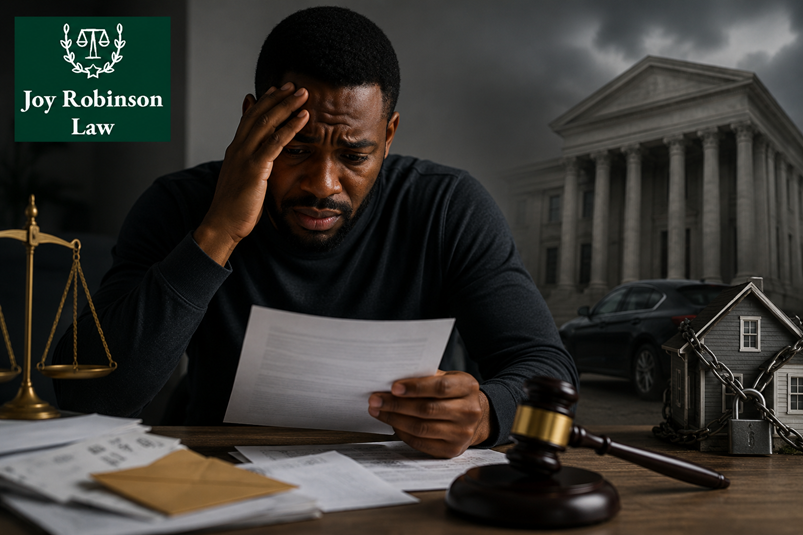
What Happens If You Ignore a Debt Collection Lawsuit in Maryland?
Getting served with a debt collection lawsuit is stressful. The envelope arrives, and the instinct for most people is to set it aside and hope the problem disappears on its own. But ignoring a debt collection lawsuit in Maryland is one of the costliest mistakes a person can make. A debt attorney in Brentwood or anywhere across Maryland will tell you the same thing: once that response deadline passes, the situation becomes significantly harder to fix. Here is exactly what happens when you do not respond, and what you can do instead.
What Happens If You Ignore a Debt Collection Lawsuit?
When a debt collector files a lawsuit, you receive a summons and complaint. This document notifies you that a case has been filed against you and gives you a deadline to respond. In Maryland, that window is typically 20 to 30 days.
If you miss the deadline, the creditor asks the court to enter a default judgment. A default judgment means the court assumes everything the debt collector claimed is true, simply because you did not show up to dispute it. No trial. No argument. Just a ruling against you based entirely on the creditor’s version of events. Once that judgment is entered, the creditor gains powerful legal tools to collect what they claim you owe.
How Serious Is a Lawsuit From a Debt Collector?
Very serious. This is not a warning letter or a phone call you can screen. A lawsuit is a formal legal action with real, lasting consequences if left unanswered. Here is what a creditor can legally do after winning a default judgment in Maryland:
- Garnish your wages – Up to 25% of your disposable income can be taken directly from your paycheck each pay period
- Freeze or seize your bank account – The creditor can request a bank levy, forcing your bank to hand over funds sitting in your account
- Place a lien on your property – A judgment can attach to your home or other real estate, making it impossible to sell or refinance until the debt is cleared
- Add court costs, attorney fees, and interest – The original debt amount can grow considerably once a judgment is in place
An attorney in Temple Hills, MD, sees these outcomes regularly with clients who waited too long to respond. The earlier a person acts, the more legal options remain on the table.
What Happens to the Debt Itself When You Ignore the Lawsuit?
One of the biggest misconceptions is that ignoring a lawsuit makes the debt disappear. It does not. In fact, it often makes the debt larger and the situation harder to resolve.
Judgments in Maryland can remain valid and enforceable for up to 12 years. They can also be renewed. That means a creditor can pursue collection actions against you for over a decade after the original lawsuit if the judgment is never resolved.
Post-judgment interest also continues to pile up over time. A debt that started as $3,000 can grow substantially by the time a creditor moves to collect. Waiting does not shrink the problem.
How Long Before a Debt Becomes Uncollectible in Maryland?
Maryland has a three-year statute of limitations on most consumer debts. After that period, a creditor generally cannot sue you in court to collect. However, and this is important, a judgment that has already been entered resets that clock entirely.
Once a court issues a judgment against you, that judgment can be enforced for up to 12 years and renewed after that. So the three-year window only matters if the creditor has not sued yet. If they already filed and you ignored it, the statute of limitations no longer protects you. This is exactly why responding to a lawsuit, even if you think the debt is old, is so critical.
Can You Actually Defend a Debt Collection Lawsuit?
Yes, and this surprises a lot of people. Debt collectors do not always have airtight cases. To win in court, a creditor must prove several specific things. They must show they actually own the debt. They must provide documentation of the correct balance. They must show the lawsuit was filed within Maryland’s statute of limitations. And they must prove the debt legally belongs to the person they are suing.
Debt buyers, which are companies that purchase old debts for pennies on the dollar, frequently file lawsuits with incomplete or outdated records. When a defendant responds and demands proper proof, many of these cases fall apart entirely.
An attorney in Bladensburg, MD can review the lawsuit, check for procedural errors, verify whether the statute of limitations applies, and build a response that puts the burden of proof back on the creditor where it belongs. Simply responding to the lawsuit, even without a fully developed defense, forces the creditor to prove their case properly rather than winning by default.
What About Property Liens and Foreclosure Risks?
When a judgment is entered against you, it can attach to any real estate you own in Maryland. This creates what is called a judgment lien on your property. A lien means you cannot sell your home or refinance your mortgage without first paying off the outstanding judgment. For homeowners already dealing with financial pressure, this added complication can be significant.
Foreclosure law firms in Maryland frequently handle cases where unpaid judgments have created liens on properties, creating serious obstacles for homeowners trying to manage their mortgage situation. Addressing a debt lawsuit before a judgment is entered is always the cleaner, less costly path forward.
What Should You Do If You Receive a Debt Collection Lawsuit?
Do not panic, but do act quickly. Here is a clear, practical approach:
- Read the summons carefully. Note the response deadline and the court where the case was filed.
- Do not ignore the deadline. Once it passes, the creditor can request a default judgment immediately.
- Gather any documents related to the debt. This includes old statements, payment records, and any prior correspondence from the creditor.
- Contact a consumer rights or debt attorney right away. They can review the claim, spot weaknesses in the creditor’s case, and file a timely response on your behalf.
- Respond to the lawsuit in writing. Even a basic response preserves your legal rights and prevents an automatic default.
At Robinson Law Firm, we remind clients that responding to a lawsuit does not mean admitting the debt is valid. It simply means exercising your right to be heard in court.
FAQs
Q: What happens if you ignore a debt collection lawsuit?
Ans: The court enters a default judgment against you. This gives the creditor legal authority to garnish wages, freeze bank accounts, or place liens on your property, all without any further court proceedings on your part.
Q: How long before a debt becomes uncollectible in Maryland?
Ans: Most consumer debts in Maryland have a three-year statute of limitations. After that window, creditors generally cannot sue. However, a judgment already entered can remain enforceable for up to 12 years and can be renewed.
Q: What is the 7-7-7 rule for debt collectors?
Ans: The 7-7-7 rule limits collectors to seven calls within seven days per debt and prohibits calling within seven days after speaking with you. It is part of the updated FTC guidelines under the Fair Debt Collection Practices Act.
Q: What are the 11 words to stop a debt collector?
Ans: The phrase is: “Please cease and desist all calls and contact with me.” Sending this in writing requires most collectors to stop contacting you, though it does not eliminate the underlying debt itself.
Q: What is the worst thing a debt collector can do legally?
Ans: The worst legal outcome is obtaining a default judgment, which enables wage garnishment, bank levies, and property liens. Illegal tactics like harassment or misrepresentation are separate FDCPA violations that can be challenged and may entitle you to damages.
Facing a Debt Lawsuit in Maryland? Let Us Fight Back With You
At Joy Law Firm, our team works with clients across Maryland to respond to debt collection lawsuits, challenge creditor claims, and protect your financial rights at every step. Whether you are looking for attorneys in Upper Marlboro, Maryland, or anywhere across Prince George’s County, we are ready to review your situation and walk you through your options clearly.
Do not wait until a default judgment is already on the books. Reach out to us today for a consultation, and let us help you take back control before the window closes.